CJEU, Judgment of 2 July 2026, Case C-67/25, Traugott Ickeroth, ECLI:EU:C:2026:534
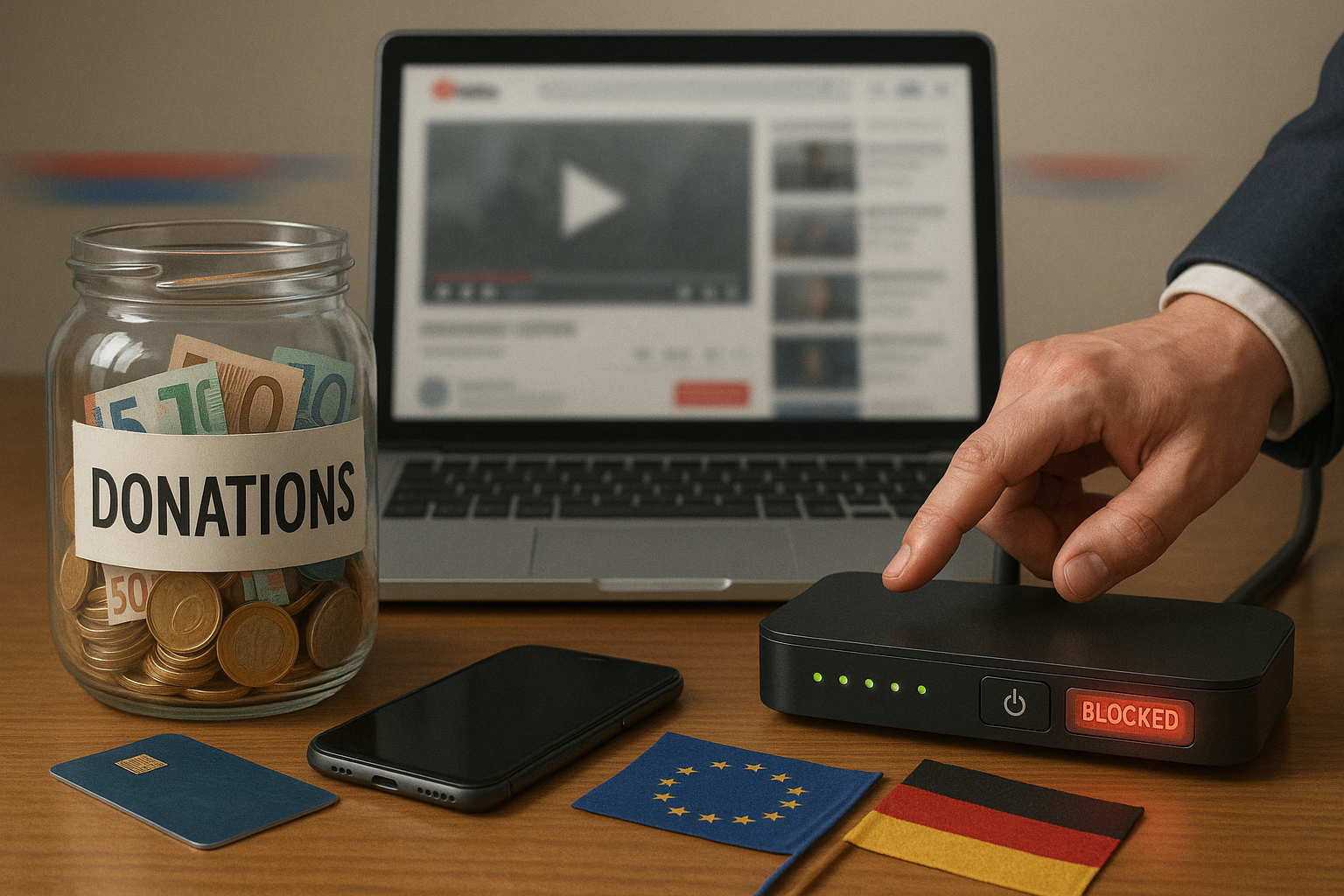
In a judgment of 2 July 2026, the Court of Justice of the European Union (“CJEU”) clarified the meaning of “operator” in Article 2f(1) of Regulation (EU) No 833/2014. The Court adopted a considerably broader interpretation than the one previously advocated by the European Commission in its sanctions FAQs.
The judgment is noteworthy not only because it extends the broadcasting prohibition to private individuals operating non-commercial websites. It is also a particularly clear reminder that the Commission’s sanctions FAQs are not legally binding. Where the Commission adds a requirement that cannot be found in the Regulation itself, the Court will disregard that guidance.
Following the judgment, the Commission amended its FAQ on 17 July 2026 and brought its interpretation into line with the Court.
The prohibition in Article 2f of Regulation 833/2014
Article 2f(1) of Regulation 833/2014 prohibits operators from broadcasting, or enabling, facilitating or otherwise contributing to the broadcast of, content by the legal persons, entities or bodies listed in Annex XV to the Regulation. The prohibition expressly covers transmission or distribution by cable, satellite, IP-TV, internet service providers and internet video-sharing platforms or applications.
One of the media outlets listed in Annex XV is RT – Russia Today Germany.
The Regulation, however, does not define the term “operator”. This gave rise to uncertainty as to whether the term was limited to professional or commercial operators or could also encompass private individuals.
The facts: RT Germany videos on a donation-funded website
The preliminary reference arose from criminal proceedings before the Landgericht Saarbrücken in Germany.
Three individuals were accused of having made videos produced by RT Germany publicly available in 2023 through the “Live-Ticker” section of the website traugott-ickeroth.com. One of the defendants was allegedly responsible for the editorial content of the website.
Access to the website was free of charge. Users were, however, invited to support it by donations. According to the referring court, payments totalling EUR 60,038.65 had been received between April 2022 and August 2023.
This raised an important question: is an individual who runs such a website an “operator” within the meaning of Article 2f even if the website is not operated as an ordinary commercial business and its only income consists of voluntary donations?
The uncertainty was reinforced by the Commission’s own guidance.
The Commission’s interpretation before the judgment
Before the CJEU judgment, Question 6 of the Commission’s Media FAQ expressly linked the concept of operator to a commercial or professional activity.
The relevant passage stated that Article 2f applied to:
“any person or entity or body exercising a commercial or professional activity”
that broadcasts or assists in broadcasting the content concerned.
Question 6 itself had last been updated on 23 March 2022. The Commission’s pre-judgment Media FAQ was subsequently republished in a document stated to be “as of 14 May 2024”.
European Commission – Media FAQ, pre-judgment version (as of 14 May 2024)
This wording mattered. If “operator” required a commercial or professional activity, purely private activities could arguably fall outside Article 2f. That was precisely the problem identified by the Landgericht Saarbrücken: a freely accessible website funded only by donations might potentially be regarded as a private rather than a professional activity.
The CJEU rejected this limitation.
The CJEU: “operator” is a functional concept
The Court started from the fact that “operator” is not defined anywhere in Regulation 833/2014 and that the Regulation does not refer to national law for its meaning. The term therefore had to be given an autonomous interpretation based on its ordinary meaning, its context and the objectives of the legislation.
Applied to communications and the dissemination of media and digital content, the Court considered an operator to include any natural or legal person who is directly or indirectly responsible for making the content available or transmitting it to the public.
Crucially, the Court found no basis for limiting the term to economic actors.
The Court pointed out that, in most language versions, Article 2f uses the equivalent of “operator”, not “economic operator”. It also noted that the provision expressly covers modes of internet distribution which are generally available free of charge and which do not necessarily involve remuneration.
The result is a functional rather than economic definition: what matters is the person’s role in making the prohibited content available, not whether the person is conducting a business.
The Court expressly rejects the Commission’s interpretation
This is perhaps the most interesting part of the judgment.
The Court did not merely arrive at an interpretation different from that contained in the FAQ. It expressly addressed the Commission’s guidance and explained why it was wrong.
First, the Court emphasised the legal status of the FAQs. They are merely a working document prepared by the Commission’s services. They are intended to provide guidance on the implementation and interpretation of Regulation 833/2014 but have no binding legal effect.
Second, the Court identified precisely what was wrong with the Commission’s interpretation. By making the concept of operator dependent upon the exercise of a “commercial or professional” activity, the Commission had introduced an additional requirement which did not appear in Article 2f itself. According to the Court, this resulted in an unjustified restriction of the personal scope of the provision.
The English judgment puts the point particularly clearly: the Commission’s FAQs
“introduce a requirement which is not apparent from the wording”
of Article 2f(1).
The Court therefore concluded that the FAQs could neither alter the scope of the restrictive measures enacted by the Council nor be decisive for the interpretation of Article 2f.
This is significant beyond the specific media sanctions at issue. Businesses and practitioners frequently rely on Commission FAQs when interpreting the increasingly complex provisions of the EU sanctions regulations. Traugott Ickeroth demonstrates the limits of such reliance: Commission guidance can assist in interpreting the Regulations, but it cannot introduce additional conditions or narrow down obligations established by the Council.
The Regulation itself distinguishes between “operators” and “economic operators”
The Court found additional support for its conclusion in the structure of Regulation 833/2014.
Other provisions expressly refer to “economic operators”. Article 3r(4), for example, uses that term in relation to due-diligence requirements concerning LNG transhipment services.
For the Court, this distinction was deliberate. Where the EU legislature wished to restrict a measure to persons engaged in economic activity, it knew how to say so. It did not do so in Article 2f.
Consequently, whether a person carries out an economic activity or receives income is not a decisive criterion for determining whether that person is an operator under Article 2f.
No exemption for small-scale or occasional dissemination
The judgment goes further still.
The defendants had argued that the concept should at least require dissemination activities of a certain duration or significance, thereby excluding isolated or insignificant instances of publication.
The Court rejected that argument as well.
Neither Article 2f nor Regulation 833/2014 establishes a minimum threshold based on the extent or duration of dissemination. Such a threshold could, moreover, facilitate circumvention by allowing prohibited broadcasting activities to be artificially divided into smaller individual acts.
The concept of operator therefore does not depend on:
- whether the activity is commercial;
- whether it is remunerated;
- how the activity is financed;
- the scale of the dissemination; or
- its duration.
Instead, the decisive factor is the person’s responsibility for making the relevant content available or transmitting it to the public.
The Commission changes its FAQ after the judgment
The Commission reacted quickly. On 17 July 2026, only fifteen days after the judgment, it updated Question 6 of its Media FAQ. The current document expressly refers to Traugott Ickeroth.
The revised FAQ now states that “operator” includes:
“any natural or legal person directly or indirectly responsible”
for making the relevant content available or transmitting it to the public.
The Commission then expressly confirms that this applies irrespective of whether the activity is economic in nature, and that non-remunerated activities and websites financed through voluntary third-party contributions may therefore fall within Article 2f. It also incorporates the Court’s conclusion that neither the extent nor the duration of the broadcasting activity is relevant.
European Commission – current Media FAQ, 17 July 2026
The change can therefore be summarised quite starkly:
Before the judgment: the Commission linked “operator” to a commercial or professional activity.
After the judgment: the Commission accepts that the term also covers persons acting without any economic activity or remuneration.
The revised FAQ is not merely a clarification of the previous guidance. On the central issue before the Court, it represents a substantive correction prompted by the CJEU’s rejection of the Commission’s former interpretation.
The ruling
The Court ultimately held that a natural person operating a website on which content originating from entities listed in Annex XV is disseminated is an “operator” within the meaning of Article 2f(1), even where the website generates income only through voluntary donations or gifts from third parties.
The judgment therefore gives Article 2f a very broad personal scope. Even private individuals may be caught by the broadcasting prohibition where they themselves make sanctioned media content available to the public.