

Introduction
In a decision rendered on 9 February 2026 [2026] SGHC 32, the Singapore High Court rejected an application to set aside the order of a SIAC tribunal terminating an arbitration because the claimant could not continue the proceedings due to sanctions. The case confirmed the tribunal’s obligation to terminate an arbitration when continuation becomes “impossible,” even where the impossibility arises from external circumstances and causes prejudice, such as the expiry of limitation periods for claims. Find below a detailed overview of the decision and the legal reasoning based on Article 32(2)(c) of the UNCITRAL Model Law.
Factual Background
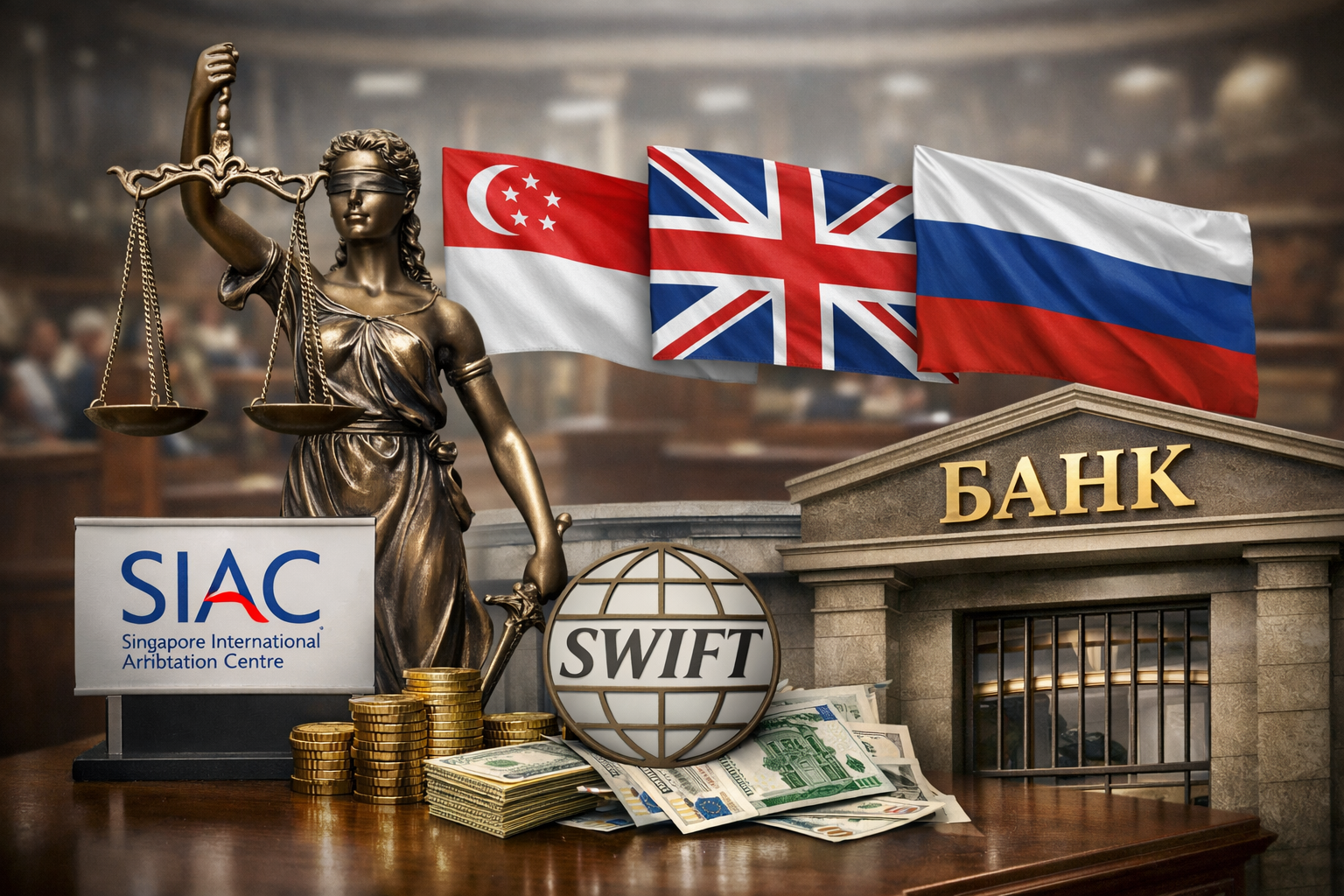
The dispute originated from a contractual claim governed by English law, with the arbitration agreement requiring disputes to be resolved in Singapore under the SIAC Rules. In 2022, several countries imposed sanctions on the claimant, freezing its assets and cutting it off from international payment systems like SWIFT. As a result, the claimant was unable to pay SIAC deposits, its lawyers, or any sums awarded by the tribunal, rendering it “impossible” to progress the arbitration.
Following initial stays to address sanctions-related issues, the respondent filed for termination of the proceedings under Article 32(2)(c) of the UNCITRAL Model Law. The tribunal ultimately held that the sanctions caused impossibility, thus requiring termination and precluding further determination on the merits.
The claimant did not agree with the termination of the arbitral proceedings and challenged this decision in front of the High Court of Singapore. The High Court confirmed the order of the tribunal and reasoned as follows:
Legal Reasoning: Article 32(2)(c) UNCITRAL Model Law
The Court confirmed that Singapore law incorporates Article 32, which provides two mutually exclusive methods of terminating arbitral proceedings: by final award (Art 32(1)), or by tribunal order under Art 32(2) where continuation is “impossible.” Article 32(2)(c) mandates that a tribunal must terminate proceedings upon finding impossibility, regardless of prejudice to any party or its cause.
Key points from the Court’s reasoning:
- The tribunal’s duty to afford natural justice in these circumstances is limited to the determination of impossibility; it does not extend to ensuring a hearing on the merits if such hearing cannot be practically conducted.
- Article 32(2)(c) confers no discretion to weigh prejudice or causes; it turns solely on an objective finding of impossibility.
- Impossibility may arise from reasons outside the parties’ control, such as sanctions; such external causes do not affect the requirement to terminate.
- The right to a determination on the merits is not absolute in arbitration governed by the Model Law; procedural fairness is preserved even if sanctions prevent continuation.
Natural Justice and Procedural Fairness
The claimant submitted that its right to a determination on the merits and procedural fairness were violated, owing to the termination order. The Court rejected this, emphasizing:
- The claimant had ample opportunity to present its case regarding impossibility and was not denied equal treatment or a fair process.
- The tribunal was not required to weigh the relative prejudice or causes of impossibility; its role was to determine, objectively, whether continuation was still feasible.
- Allegations of irrationality or capriciousness were found baseless; the tribunal acted within its powers, considering the evidence and circumstances appropriately.
Conclusion
[2026] SGHC 32 affirms the tribunal’s mandatory power to terminate arbitral proceedings under Article 32(2)(c) UNCITRAL Model Law when sanctions or other circumstances make continuation impossible. The ruling redefines expectations regarding procedural rights in such situations and underscores the necessity for claimants to proactively address obstacles in pursuing claims in international arbitration.
The parties to the arbitration have been anonymised, but it seems safe to conclude that the claimant is a sanctioned Russian bank. The fact that the Singapore court confirmed the impossibility to continue arbitration due to sanctions as a reason to terminate the arbitration seems to confirm the Russian position expressed in the Lugovoy Law that proceedings outside of Russia are impossible for sanctioned Russian entities. No doubt this decision will be welcomed in the Russian legal sphere.