

Introduction
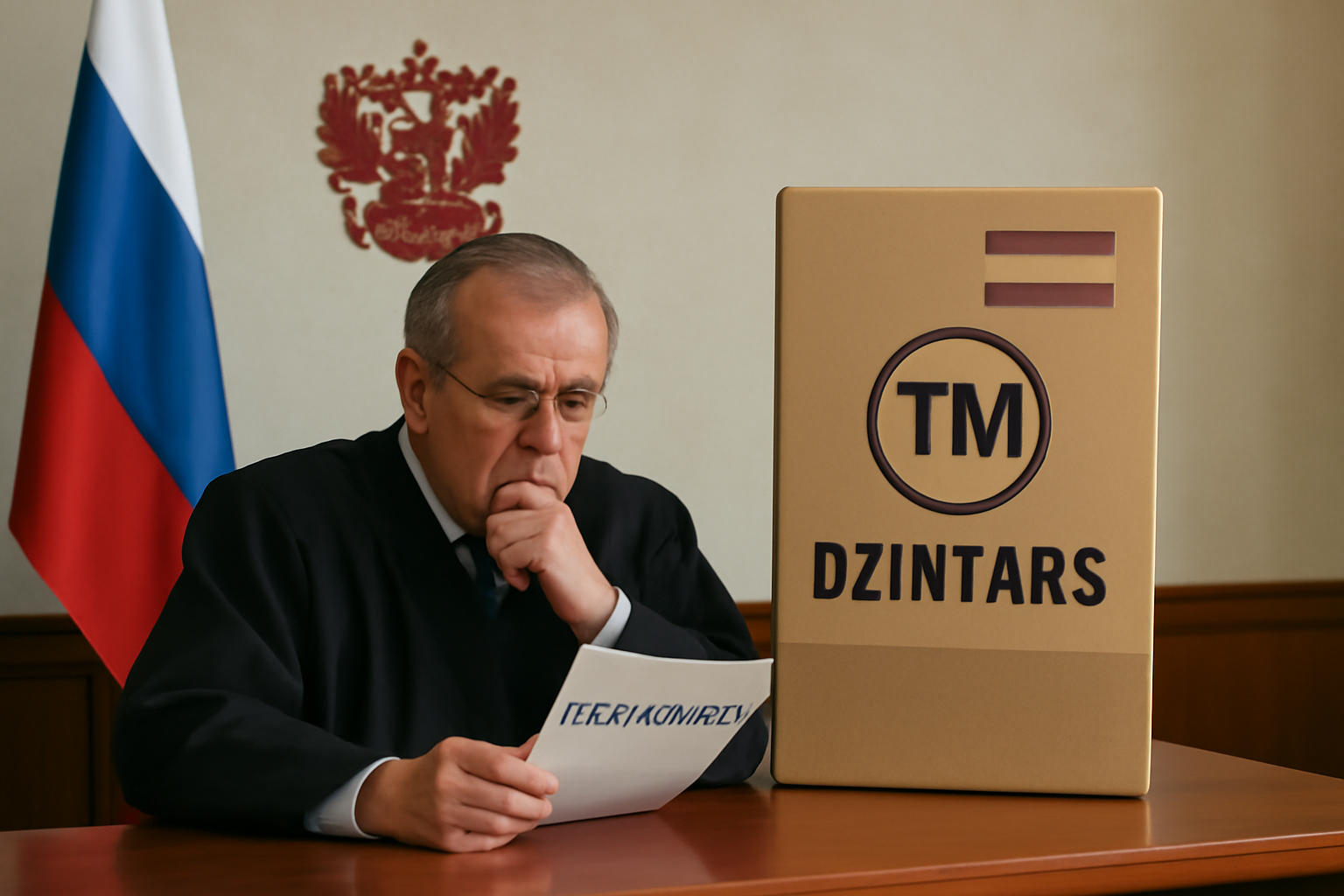
In an environment characterized by increasing legal isolation and skepticism towards judgments from Western or so-called “unfriendly” countries, a recent ruling by the Moscow Arbitrazh Court (Case No. A40-300609/2024, published on 11 November 2025) stands out. The court confirmed the recognition of a Latvian court decision impacting high-value international trademarks, even as diplomatic relations between Russia and Latvia remain tense. No explicit reference was made in the judgment to sanctions or to Latvia’s status as an “unfriendly country,” making the court’s adherence to legal norms particularly notable under current circumstances.
Factual Background of the Decision
This case arose from a request by the Russian company LLC “MANIFIK-TREND” to refuse recognition of a decision by the Riga Regional Court of Latvia. The Latvian court, in June 2022, had annulled certain transfers of national and international “Dzintars” trademarks resulting from the insolvency proceedings of the Latvian company A.S. “Dzintars.” As a result, trademark ownership reverted to the insolvent company, and the World Intellectual Property Organization updated its records accordingly.
Importantly, MANIFIK-TREND had previously been recognized as a holder of some of these trademarks. It argued that recognition of the Latvian judgment in Russia would unjustly deprive it of rights and harm its business interests. The Latvian company N.A. Brieger countered the request, and the Russian Federal Service for Intellectual Property (Rospatent) participated as a third party.
Key Legal Findings: Grounds for Recognition and Public Policy
The Moscow court reaffirmed that, under Russian procedural law and prior bilateral treaties, foreign judgments on civil and insolvency matters are generally recognized in Russia, except in cases of exclusive Russian jurisdiction or manifest breaches of public order.
The court’s main conclusions included:
- The Latvian court’s ruling, which restored trademark rights to the insolvent Latvian company, did not concern issues of exclusive Russian jurisdiction.
- MANIFIK-TREND was not a direct party to the foreign bankruptcy case, and the outcome did not specifically remove its rights or impose obligations against it.
- Differences in appeal procedures between Russia and Latvia, or complaints about limited remedies in Latvia, were insufficient to block recognition in Russia. The mere fact that Russian companies may have fewer legal avenues abroad did not amount to a public policy violation.
- The court found no compelling evidence that recognition of the Latvian decision would undermine fundamental legal principles or threaten Russia’s sovereignty or security.
Procedural Aspects and Business Implications
On a procedural level, the court determined that MANIFIK-TREND had observed all relevant deadlines to challenge recognition in Russia. The decision underscores that, despite the broader political context and absence of explicit references to sanctions or Latvia’s “unfriendly” status, Russian courts may still apply established legal standards in cross-border insolvency matters involving intellectual property.
Summary: What Does This Mean for IP Holders and Businesses?
This case is remarkable in the current climate, as the Russian court demonstrated commitment to legal process and mutual recognition of foreign judgments. This should be standard, but in the current climate in Russia, it is not. Unfortunately, Russian court practice remains unpredictable, in this case it seems, no undue influence was exercised, but there is no guarantee that in the next similiar case, a contradicting decision will be rendered.