Not all ICC-arbitration clauses are disregarded by Russian courts
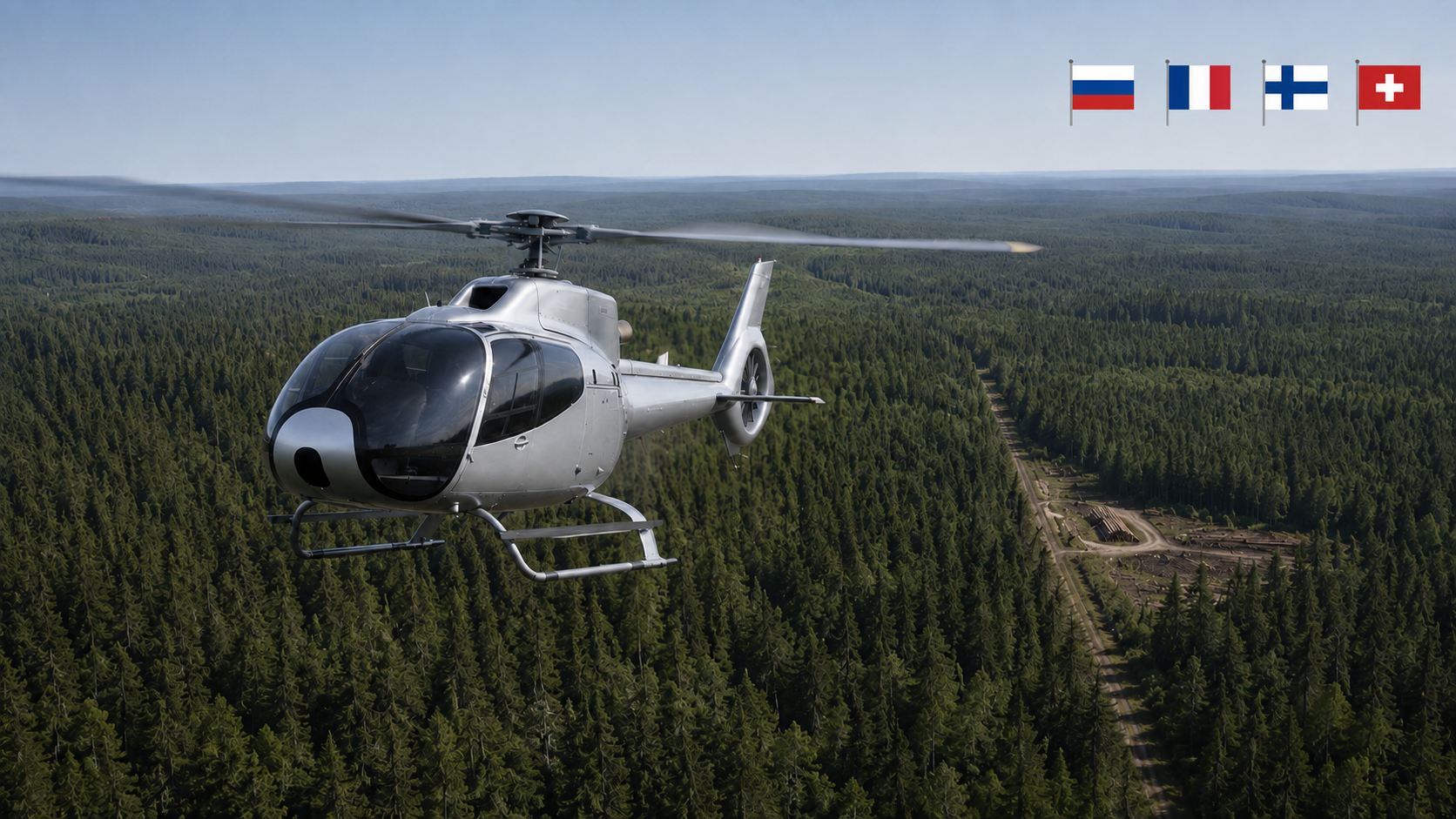
Two Russian courts were recently seized with the question whether an ICC-arbitration with seat in Geneva is an obstacle to proceedings on the merits in Russian. The one court (St. Petersburg) referred the Finnish claimant to arbitration in Geneva against the Russian defendant, the other (AS Komi Republic) rendered a decision in favour of a Russian claimant against a French helicopter manufacturer. It might be that the answer to the question of jurisdiction depends on the party who asks the question, but that was not the only difference in these two matters:
In a decision dated 14 August 2026, the Arbitrazh Court of St Petersburg and the Leningrad Region in case number A56-48889/2026 rendered a judgment on whether a Finnish supplier could pursue a Russian debt claim despite an ICC arbitration clause providing for arbitration in Geneva, Switzerland.
The court left the Finnish supplier’s claim without consideration. It held that sanctions did not automatically establish Russian jurisdiction, that the claimant had shown no obstacle to its own access to arbitration in Switzerland, and that it could not invoke alleged barriers affecting the Russian defendant when that defendant insisted on the agreed arbitral forum.
That reasoning contrasts with the decisions in the case decided in the Komi Republic (Luzales dispute). In case A29-13604/2024, the Russian courts accepted jurisdiction over Luzales’ claim against Airbus Helicopters and awarded repayment of a helicopter advance. In case A29-3225/2026, the court then restrained Airbus Helicopters from pursuing related ICC proceedings in Geneva.
The three court acts apply the same statutory framework to different parties, procedural positions and evidence concerning access to justice.
The Luzales Helicopter Contract
Luzales is a Russian forestry and wood-processing company based in the Komi Republic. On 14 September 2021, it contracted with the French manufacturer Airbus Helicopters for one new 2022 civil EC130T2 helicopter, also referred to as an H130. The contract also covered technical documentation, training and technical support.
The total contract price was EUR 3,090,802.40, excluding applicable taxes and charges. Luzales paid an advance of EUR 927,240.72. Delivery was initially to take place at the Airbus Helicopters factory in Marignane, France, by 30 September 2022 on FCA Incoterms 2020 terms.
The helicopter was not delivered. The parties concluded a termination and settlement agreement dated 1 June 2023, which the appellate court found was signed and became binding on 13 June 2023. Airbus Helicopters was to transfer EUR 927,240.72 within ten days, making payment due by 23 June 2023. The repayment obligation was expressed as being:
“subject to compliance with all applicable laws, including Sanctions or Export Control Laws.”
Both the supply contract and termination agreement selected French law. Article 15 of the contract provided that disputes would be finally settled under the ICC Arbitration Rules, with the arbitration in Geneva in the English language. Article 5 of the termination agreement confirmed that clause. Airbus Helicopters did not return the advance.
The Payment Judgment in Case A29-13604/2024
Despite the arbitration clause, Luzales brought proceedings in the Arbitrazh Court of the Komi Republic to recover the advance and late-payment penalties. Airbus Helicopters requested that the claim be left without consideration because the parties had agreed to arbitration.
By an order dated 5 August 2025, the court rejected that request, treated the dispute as falling within the exclusive jurisdiction of the Russian arbitrazh courts and proceeded to determine the monetary claim.
Applying the parties’ choice of French law, the court referred to Articles 1103 and 1104 of the French Civil Code. It treated the termination agreement as binding and found that Airbus Helicopters had undertaken to return the advance. The court applied Article L441-10 of the French Commercial Code when determining the late-payment rate.
On 21 October 2025, the court awarded Luzales EUR 927,240.72 as repayment of the advance and EUR 291,969.71 in penalties for the period from 24 June 2023 to 7 October 2025. It also awarded continuing penalties from 8 October 2025 until payment, calculated by reference to the European Central Bank refinancing rate plus ten percentage points, and RUB 200,000 in court fees.
The Appellate Ruling in Case A29-13604/2024
Airbus Helicopters appealed. It argued that Article 15 of the contract required final resolution under the ICC Arbitration Rules in Geneva and that Article 5 of the termination agreement had confirmed the arbitration clause after the sanctions relied upon by Luzales had already been introduced.
On 4 February 2026, the Second Arbitrazh Court of Appeal dismissed the appeal. It relied on Article 247(2) and Article 248.1(1) and (4) of the Arbitrazh Procedure Code.
In the appellate court’s analysis, Article 11 of Council Regulation (EU) No. 833/2014, Switzerland’s support for the European Union’s measures and Switzerland’s inclusion on the Russian government’s list of states taking unfriendly actions meant that Luzales lacked guarantees of a fair hearing and effective legal protection in the agreed foreign arbitration.
The appellate court found that confirmation of the arbitration clause in the 2023 termination agreement, and the fact that some Russian parties had obtained favourable decisions abroad, were insufficient to establish the absence of restrictions on Luzales’ access to justice.
It also reviewed the monetary claim under French law. The appellate court held that payment was due no later than 23 June 2023 and that an addendum signed on 27 December 2023 did not cancel the repayment obligation. It affirmed the first-instance judgment in full.
The ICC Proceeding and Anti-Suit Application
The order dated 9 August 2026 records that Airbus Helicopters commenced ICC case no. 30027/ICA2 and sought a declaration that the arbitration clause was valid.
Luzales applied under Articles 248.1 and 248.2 of the Arbitrazh Procedure Code for an order prohibiting Airbus Helicopters from continuing that arbitration and from bringing other foreign proceedings arising from the supply contract or termination agreement.
Luzales argued that European Union and Swiss restrictive measures affecting the Russian forestry sector created barriers to effective access to justice abroad. Airbus Helicopters responded that Luzales was not subject to individual sanctions and that sectoral measures were insufficient to engage Articles 248.1 and 248.2.
Airbus Helicopters also relied on the agreed arbitration clause, contended that Luzales had reaffirmed the clause after the principal restrictions had been introduced, and invoked estoppel. It submitted that Luzales’ participation in the ICC arbitration demonstrated that the agreed procedure remained workable.
Legal Considerations in Case A29-3225/2026
The court relied on paragraph 15 of Supreme Court Thematic Review No. 8/2026, under which an arbitration clause does not prevent a Russian court from examining an application to restrain foreign litigation or arbitration involving a party affected by restrictive measures.
It adopted a broad, purposive interpretation of Articles 248.1 and 248.2. The court held that a Russian company need not be individually listed under a foreign sanctions regime where sectoral restrictions apply to its business and impede access to justice.
The order referred to Articles 3i and 3k of Council Regulation (EU) No. 833/2014 and the associated annexes, as well as Article 14c and Annex 20 of the Swiss Ordinance on Measures Connected with the Situation in Ukraine. The court regarded Luzales’ logging, timber-production and export activities as bringing it within measures concerning Russian timber and wood products.
Paragraph 17 of Supreme Court Thematic Review No. 8/2026 was central to the reasoning. As summarised in the order, an economic dispute falls within Russian arbitrazh jurisdiction if it arose in connection with foreign restrictive measures or if those measures created obstacles to access to justice, including where the parties agreed to arbitration.
The court rejected the waiver and estoppel arguments. It held that participation in the ICC proceedings, including participation intended to avoid a default outcome, did not constitute a clear waiver of Russian judicial protection.
The Anti-Suit Order and Its Relationship to the Merits Judgment
By the time of the anti-suit order, the monetary judgment had been affirmed on appeal and had taken effect. The court treated those proceedings as evidence of a stable connection with Russian jurisdiction and invoked the finality of judgments, or res judicata.
The court considered that allowing the ICC proceedings to continue could facilitate an attempt to circumvent or revisit the result already reached in Russia.
It prohibited Airbus Helicopters from continuing ICC case no. 30027/ICA2 and from initiating or continuing other foreign proceedings connected with the helicopter contract or termination agreement. Airbus Helicopters was ordered to provide evidence within ten days that it had taken all possible measures to terminate the relevant proceedings.
For breach of either prohibition, the court set a judicial penalty of EUR 150,000, payable in roubles at the Central Bank of Russia exchange rate on the payment date.
The Finnish Supplier’s Claim in Case A56-48889/2026
TM System Finland Oy entered into supply and services contract no. SP1192 with JSC Group Ilim on 10 April 2020. Under addendum no. 2 dated 15 March 2023, the Finnish supplier was to manufacture and supply ventilation equipment for the machine hall of a pulp and cardboard mill project in Ust-Ilimsk, Russia, and provide installation-supervision services at the buyer’s industrial site.
TM System Finland brought proceedings in St Petersburg for EUR 356,090 in principal debt, EUR 25,700.24 in penalties calculated at five per cent per year from 13 November 2024 to 23 April 2026, and continuing penalties from 24 April 2026 until payment.
Clause 30 contained the following arbitration agreement, as reproduced by the court and translated here:
“All disputes arising out of or in connection with the Contract, including questions of its validity, breach or termination, shall be finally resolved under the ICC Arbitration Rules by three arbitrators. The seat shall be Geneva, Switzerland, and the language shall be English.”
TM System Finland argued that the dispute was closely connected with Russia. The equipment was intended for a Russian industrial project, payment was to be made through the Russian buyer’s bank account in Moscow, the supervision services were to be performed in Russia, and evidence concerning delivery, acceptance and installation was located there.
The Finnish claimant also argued that foreign proceedings during restrictive measures affecting Russian persons could not be regarded as fair and would deprive the Russian party of access to justice.
Group Ilim objected before making submissions on the merits and asked the court to leave the claim without consideration under Article 148(1)(5) of the Arbitrazh Procedure Code.
Legal Considerations in Case A56-48889/2026
The St Petersburg court began from the rule that a timely objection based on a valid arbitration agreement requires a Russian court to leave the claim without consideration unless the agreement is invalid, has ceased to have effect or cannot be performed.
The court referred to the Russian Supreme Court’s ruling of 28 November 2024 in case A40-214726/2023. Under the test quoted in the decision, a Russian court may assume jurisdiction despite a foreign arbitration clause where sanctions were the direct cause of the dispute or where the agreed procedure can no longer operate as intended because a party faces evident obstacles to access to justice.
It also relied on Constitutional Court rulings nos. 999-O of 29 April 2025 and 2615-O of 14 October 2025. The court understood those rulings as rejecting automatic Russian jurisdiction whenever a sanctioned person participates in a dispute and as requiring examination of the subject matter, the parties, the surrounding circumstances and the procedural rights of all participants.
TM System Finland had not established that the arbitration agreement was invalid or incapable of performance. As a Finnish company, it was not itself subject to the restrictions invoked in its submissions and produced no evidence that those measures impeded its ability to commence arbitration in Switzerland.
The court held that the claimant was effectively trying to assert access-to-justice obstacles on behalf of Group Ilim. Group Ilim, however, expressly opposed the Russian proceedings and relied on the arbitration agreement before addressing the merits.
In the absence of the Russian party’s consent to transfer the dispute to the Russian courts, the court found that Articles 248 and 248.1 did not confer exclusive Russian jurisdiction.
The claim was left without consideration and the court ordered the return of RUB 560,873 in state duty to TM System Finland. The order stated that it could be appealed to the Thirteenth Arbitrazh Court of Appeal within one month.
Comparison of the Courts’ Reasoning
The decisions address materially similar dispute-resolution clauses. Both commercial relationships referred disputes to ICC arbitration in Geneva and both led a party to invoke foreign restrictive measures as a reason for Russian adjudication. The outcomes differed because the courts identified different affected parties, evidence and procedural positions.
First, Luzales was the Russian claimant seeking domestic judicial protection for its own monetary claim. It asserted that sectoral measures affecting the Russian forestry industry impaired its access to justice. TM System Finland was a Finnish claimant seeking to litigate in Russia and attempted to rely on restrictions allegedly affecting its Russian opponent.
The St Petersburg court held that the Finnish company could not invoke another party’s supposed obstacle where that party disclaimed the obstacle and insisted on arbitration.
Second, the Luzales courts treated the existence and operation of sectoral forestry sanctions as sufficient to establish the relevant access barriers. The appellate court held that confirmation of the arbitration clause after sanctions and examples of favourable foreign decisions involving other Russian parties did not remove those barriers.
The anti-suit court went further, stating that personal listing was unnecessary where sectoral restrictions applied to the Russian company’s business.
By contrast, the St Petersburg court emphasised that jurisdiction under Article 248.1 is not automatic. It required evidence that sanctions directly caused the dispute or created an evident obstacle for the party invoking Russian jurisdiction. Because the Finnish claimant showed no restriction on its own access to Geneva arbitration, the clause remained enforceable.
Third, the Russian party’s procedural position pointed in opposite directions. Luzales consistently requested Russian jurisdiction and later sought an anti-suit order. Group Ilim timely objected to Russian adjudication and requested enforcement of the ICC clause. The St Petersburg court treated the absence of Group Ilim’s consent to a Russian forum as material.
Fourth, the anti-suit order followed a Russian merits judgment that had already been affirmed on appeal. The Komi court relied on res judicata and the risk that the ICC case could be used to circumvent or revisit that judgment. In TM System Finland v Group Ilim, no merits judgment had been entered and the Russian defendant raised the arbitration clause at the beginning of the proceedings.
Accordingly, the decisions do not apply two entirely separate legal standards. They differ in how strictly the courts required proof of sanctions-related barriers and in whether the person allegedly affected by sanctions actually sought protection in the Russian courts.
Related Coverage
For another recent application of Articles 248.1 and 248.2, see Lugovoy Law can be invoked against Russian Parties. That post discusses case A40-27279/2026 and the same Supreme Court guidance on sanctions-related obstacles to foreign litigation and arbitration.
KDB.legal advises in similar matters, so if you have any questions relating to cases involving the enforcement of foreign arbitral or court decisions in Russia or vice-versa of Russian decisions in Germany and Europe, do not hesitate to contact us.