

I. Introduction
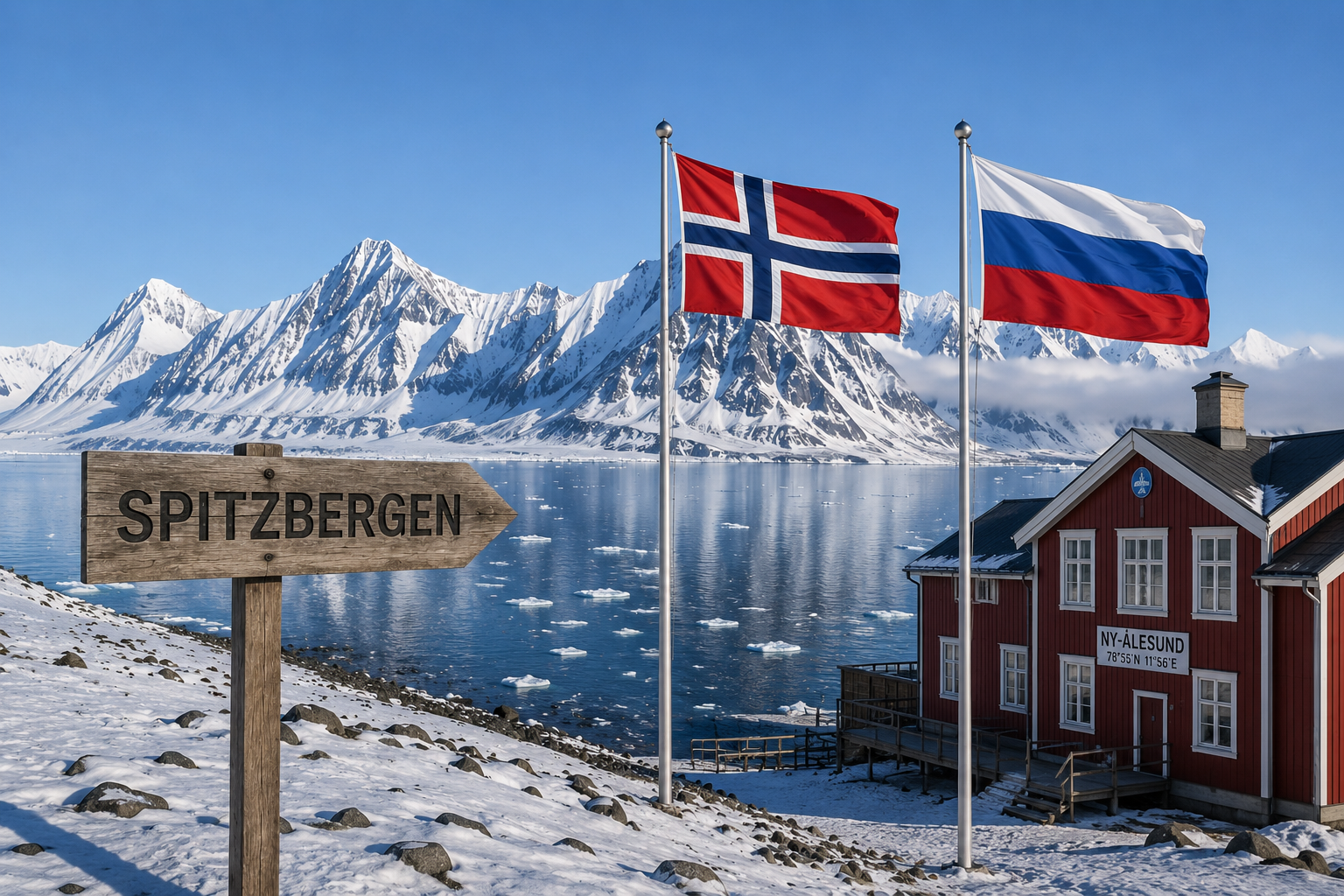
On 20 December 2024, the Nord‑Troms og Senja District Court in Norway rendered a decision on the enforcement of a foreign arbitral award against assets of the Russian Federation located on Svalbard (Spitsbergen) (case no. 24‑163368TVA‑TNTS/TTRM). The case concerns Yukos Capital Limited’s attempt to secure and enforce a multi‑billion‑dollar UNCITRAL arbitration award arising under the Energy Charter Treaty (ECT) against immovable property linked to Russia on Svalbard.
The ruling is noteworthy for at least three reasons:
- It confirms the enforceability in Norway of an ECT‑based arbitral award, following unsuccessful set‑aside proceedings before the Swiss Federal Supreme Court.
- It draws a nuanced line between protected and non‑protected state property under customary international law of state immunity as reflected in the 2004 UN Convention on Jurisdictional Immunities of States and Their Property (the “State Immunity Convention”).
- It provides a rare and detailed judicial assessment of Russian state‑linked assets on Svalbard, differentiating between various mining settlements and their status as “cultural heritage” or commercial property.
For enforcement practitioners and states alike, the decision illustrates how courts may handle mixed‑use state property, cultural‑heritage claims, and strategic behavior by respondent states in post‑award enforcement.
II. Factual and Procedural Background
1. The arbitral award
Yukos Capital sought enforcement of a final award rendered by an ad hoc arbitral tribunal constituted under the 1976 UNCITRAL Arbitration Rules, with the Permanent Court of Arbitration acting as appointing authority and secretariat, and with its seat in Switzerland. The arbitration was based on Article 26(4)(b) of the ECT and concerned Russia’s expropriation of a receivable Yukos Capital held against its Russian parent, Yukos Oil Company OJSC.
The tribunal found that the receivable had been unlawfully expropriated and that Russia had subjected Yukos to unfair and discriminatory treatment, ordering Russia to repay the receivable plus contractual and default interest and to bear Yukos’ costs. Russia sought to set aside the award before the Swiss courts, but the matter was finally resolved in Yukos’ favour by the Swiss Federal Supreme Court on 24 August 2022.
Yukos Capital then turned to Norway, requesting enforcement against Russian‑linked real estate on Svalbard.
2. The claim and amounts
Yukos applied for attachment (utlegg) for a total of USD 5,057,287,803.97 and EUR 1,557,508.42. These sums comprise:
- Principal pursuant to award para. 898(6)(i) and (ii): USD 3,696,789,207.38
- Default interest on agreed interest until 31 December 2008, para. 898(7)(i): USD 221,989,087.75
- Default interest on the loan amount and agreed interest from 31 December 2008 to 23 July 2021, para. 898(7): USD 1,117,957,046.38
- Costs under paras. 898(9) and (10): EUR 1,557,508.42 and USD 20,552,462.46
3. The Svalbard properties targeted
The rationale for seeking enforcement in Norway was Russia’s ownership of real estate on Svalbard through the state‑owned entity Trust Arktikugol (“Trusten”). Yukos sought attachment over four properties:
- Barentsburg (land register no. gnr. 19, bnr. 1)
- Grumantbyen (gnr. 21, bnr. 1)
- Bohemanflya (gnr. 32, bnr. 1)
- Pyramiden (gnr. 30, bnr. 1)
Trust Arktikugol is registered as owner of Barentsburg, Grumantbyen, and Bohemanflya; Pyramiden is still registered to “Russky Grumant” in the land register.
The District Court accepted the application on 21 October 2024. Notification to Russia was initially withheld under the Norwegian Enforcement Act (tvangsloven) in order to avoid serious impairment of enforcement prospects.
III. Legal Framework
1. Norwegian enforcement law and Svalbard
The Norwegian Enforcement Act applies on Svalbard pursuant to the Svalbard Act. For foreign arbitral awards, jurisdiction lies with the Nord‑Troms og Senja District Court, not with the local enforcement officer (Sysselmesteren). A foreign arbitral award constitutes an enforceable title under section 4‑1(2)(f) of the Enforcement Act and section 45 of the Arbitration Act, provided the award is final and no grounds for refusal exist under section 46 of the Arbitration Act.
The court identified three core issues:
- Whether Yukos holds an enforceable title (tvangskraftig tvangsgrunnlag) in Norway
- Whether Russia is the “real owner” of the Svalbard properties
- Whether the properties are protected by state immunity
2. State immunity and the 2004 UN Convention
Under section 1‑4 of the Enforcement Act, the Act applies subject to limitations recognised by international law and treaty obligations. The court relied heavily on the 2004 State Immunity Convention, which has not yet entered into force but has been recognised by the Norwegian Supreme Court as largely codifying customary international law.
Two provisions were central:
- Article 19(c): allows post‑judgment measures against state property that is “specifically in use or intended for use by the State for other than government non‑commercial purposes” and located in the forum State, provided the property is connected with the entity against which the proceedings were directed.
- Article 21(1): defines categories of property that are by definition not to be regarded as used for non‑governmental, commercial purposes under Article 19(c). Relevant here:
- Property used or intended for use in the performance of diplomatic or consular functions
- Property forming part of the cultural heritage of the State or its archives, not placed or intended to be placed on sale
IV. The Swiss Set‑Aside Proceedings and Their Significance
Yukos’ award had been challenged by Russia before the Swiss courts, culminating in a final decision of the Swiss Federal Supreme Court on 24 August 2022 rejecting the set‑aside application. Under Swiss law, an arbitral award is final from the time it is notified; in this case, the award was rendered and – on the court’s assumption – notified on 23 July 2021.
The Norwegian court relied on:
- Swiss law: finality and res judicata of the award from its notification date
- The Swiss Supreme Court’s refusal to set aside the award as strong evidence that no grounds exist under section 46 of the Norwegian Arbitration Act to refuse recognition or enforcement.
On that basis, the court held that:
- The award is final and binding in Switzerland.
- There are no apparent grounds to deny recognition or enforcement in Norway.
- Yukos therefore holds an enforceable title under section 7‑1(1) of the Enforcement Act.
For enforcement practitioners, the Swiss decision is crucial: it effectively closes off the most potent challenge to the award and provides a solid foundation for its recognition elsewhere. It also exemplifies how national courts (here, Switzerland as the seat) and third‑state courts (here, Norway) interact in the enforcement chain of an ECT‑based arbitral award.
V. Real Ownership: Attributing Svalbard Property to the Russian State
A key precondition for enforcement was whether the Svalbard properties “belonged” to Russia in the sense of Norwegian enforcement law, even though they were (formally) held by Trust Arktikugol or “Russky Grumant”.
Under Norwegian law, attachment may be levied on any asset belonging to the debtor, with the real ownership being decisive. Yukos relied on an expert opinion by Russian lawyer Drew Holiner, who has long‑standing experience with Russian and post‑Soviet law.
1. Trust Arktikugol as a “unitary enterprise”
Holiner explained that Trust Arktikugol is organised as a “unitary enterprise” under Russian law – a public entity without members or shareholders, established to manage state property or conduct economic activity. The Russian state is the founding entity; the Ministry for the Development of the Russian Far East and Arctic acts on behalf of the founder.
Crucially:
- Unitary enterprises do not own the assets transferred to them.
- They hold limited usage rights and cannot dispose of real estate (e.g. sell or mortgage) without the founder’s consent.
The court accepted Holiner’s conclusion that the Russian state must be regarded as the owner of all Trust Arktikugol properties on Svalbard under Russian law.
2. The special case of Pyramiden and “Russky Grumant”
Pyramiden (gnr. 30, bnr. 1) is still registered in the land register under the name “Russky Grumant”. Holiner traced the historical and legal record, concluding:
- The Soviet Union acquired Pyramiden via or through Russky Grumant.
- Russky Grumant was later liquidated, and its functions transferred to Trust Arktikugol.
- No Russian company by that name exists today.
The court accepted that Trust Arktikugol – and thus the Russian state – is the real owner of Pyramiden as well.
Accordingly, all four Svalbard properties were considered assets of the judgment debtor (Russia) and, in principle, available for enforcement subject to state immunity constraints.
VI. Procedural Question: Withholding Notice to Russia
Yukos requested that service of the enforcement application on Russia be withheld under section 7‑6(3) of the Enforcement Act, arguing that advance notice would significantly impair enforcement prospects.
The court emphasised that the threshold for withholding notice is high: there must be concrete reasons to believe that the debtor would dispose of or hide assets suitable for enforcement if notified.
Based on Yukos’ submissions, the court noted:
- Russia has a long history of not paying adjudicated amounts and of taking steps to evade enforcement of foreign judgments and awards.
- Russia had not paid the award despite the Swiss Supreme Court’s final decision in August 2022.
- High‑ranking Russian officials had publicly advocated measures to obstruct enforcement against Russian assets, and assets from Yukos Oil had been shifted to Rosneft to shield them from potential enforcement.
Given the importance of Svalbard operations and properties for Russia, the court considered it realistic that Russia could engage in sham transactions, sales, or encumbrances to frustrate enforcement. It therefore granted Yukos’ request and withheld notice, emphasising that Russia’s right to be heard would be preserved at a later stage, after the attachment had been created, via objections under section 6‑4 of the Enforcement Act.
VII. State Immunity Analysis – General Approach
Having established title and ownership, the court turned to state immunity.
It accepted that the State Immunity Convention largely reflects customary law and is therefore central under section 1‑4 of the Enforcement Act.
The analysis proceeded in three steps:
- Determine whether the properties fall within the specially protected categories of Article 21(1)(a) (diplomatic/consular property) or 21(1)(d) (cultural heritage). If so, they are immune from enforcement measures regardless of Article 19(c).
- If not covered by Article 21, assess whether they are specifically used or intended for use by the State for other than governmental non‑commercial purposes under Article 19(c). Property used for commercial purposes is, in principle, subject to enforcement.
- Apply the above to each property, taking into account comparative jurisprudence (notably a 2011 decision of the Swedish Supreme Court in case Ö 170‑10).
VIII. Diplomatic and Consular Property – Article 21(1)(a)
1. Barentsburg and the Russian Consulate
Russia maintains a consulate‑general in Barentsburg. The land register shows that the Russian Ministry of Foreign Affairs holds a permanent usage right over a plot of 56.3 square kilometres and certain buildings including offices and residences.
The court accepted that at least part of the Barentsburg property is used or intended to be used for consular functions, bringing it within the scope of Article 21(1)(a). However, the key question was whether this status extends to the entire property or only to the part actually used for consular purposes.
Relying on:
- The ILC’s commentary on the draft articles on jurisdictional immunities
- Scholarly commentary by Chester Brown and Roger O’Keefe, as well as Hazel Fox and Philippa Webb
- The Swedish Supreme Court’s decision in Ö 170‑10 on mixed‑use property
the court concluded:
- Article 21(1)(a) protects only property used or intended for use for diplomatic or consular functions, not all property to which a foreign ministry may formally hold rights.
- In situations of mixed use, one must assess whether the official use constitutes a “significant” or “qualified” part of the property’s overall use. If only a limited portion is used for consular functions, the entire property need not be immune.
In Barentsburg, the court found that:
- The property is primarily used for commercial activities: mining and tourism.
- The consulate is fenced and clearly separated from the rest of the settlement; the Ministry’s formal usage right over the entire area does not change the actual and intended use of the majority of the property.
- Accordingly, the consular use does not reach the threshold where the entire property should be immune from enforcement.
The court therefore held that Barentsburg as such is not protected from enforcement under Article 21(1)(a).
2. Other properties
For Pyramiden, Grumantbyen and Bohemanflya, there was no indication of consular usage or any similar usage rights in favour of the Russian Foreign Ministry. These properties do not fall under Article 21(1)(a).
IX. Cultural Heritage – Article 21(1)(d)
The more consequential analysis concerned whether the Svalbard settlements constitute “property forming part of the cultural heritage of the State … and not placed or intended to be placed on sale” within the meaning of Article 21(1)(d).
1. Applicable criteria
The court noted that the Convention text gives little guidance on what qualifies as a state’s “cultural heritage”. It therefore turned again to the ILC commentary and academic writing:
- The ILC commentary stresses that the provision is meant to protect property characterised as part of a State’s cultural heritage or archives and owned by that State.
- Brown and O’Keefe suggest that one should primarily look to the State’s own cultural‑heritage legislation and listing practice. Non‑inclusion in a national list is not necessarily conclusive but is an evidentiary issue for the court.
The District Court agreed: registration under the State’s own heritage law creates a strong presumption that the property forms part of its cultural heritage; lacking such registration does not automatically preclude that status but requires a case‑by‑case assessment.
2. The evidence on Svalbard settlements
No Svalbard properties at issue are registered in Russia’s public cultural‑heritage registers. Yukos argued that Russia does not register cultural assets located abroad in its own registers but relies on registration in the host state’s heritage registries. Norwegian registries contain a large number of buildings and items in Barentsburg, Pyramiden and Grumantbyen classified as cultural heritage; these registrations appear to have been made primarily by Norwegian authorities.
Despite the absence of Russian registration, the court held that it is “highly likely” that parts of the building stock in Barentsburg, Pyramiden and Grumantbyen must be regarded as forming part of Russia’s cultural heritage. In particular:
- These are historic mining communities dating back to the 1930s.
- The settlements and their remaining structures have a self‑standing cultural and historical value as Russian/Soviet mining communities in the Arctic.
For these settlements, the court also considered it difficult to draw meaningful lines between heritage and non‑heritage components; in the court’s view, the entire settlement areas function as cultural heritage ensembles.
By contrast, for Bohemanflya:
- The property was purchased in 1932 by Trust Arktikugol from a Dutch mining company.
- The court had no evidence of any relevant Russian historical activity on the property.
- It therefore could not see that the property bore the character of a Russian cultural monument.
3. Result under Article 21(1)(d)
The court concluded:
- Barentsburg, Pyramiden and Grumantbyen in their entirety form part of Russia’s cultural heritage and are not placed or intended to be placed on sale.
- These properties are therefore immune from enforcement under Article 21(1)(d) and Article 21’s general carve‑out from Article 19(c). Yukos cannot obtain attachment over them.
- Bohemanflya is not a Russian cultural heritage asset and is not protected under Article 21(1)(d).
This nuanced approach – granting immunity for three out of four properties based on cultural‑heritage reasoning – is the central explanation for the differing treatment of the Svalbard assets.
X. Commercial Use and Article 19(c): The Case of Bohemanflya
Having excluded Bohemanflya from Article 21 protection, the court assessed whether it nonetheless enjoys state immunity under the general rule of Article 19(c).
1. Presumption and burden of proof
The court noted that Norwegian case law on Article 19 is sparse. It referred to a 2023 decision of the Borgarting Court of Appeal (LB‑2023‑71989), involving attempted attachment of an alleged claim of Albania against Statkraft AS.
In that case, the courts held:
- The creditor bears the burden of proving that the property (there: a receivable) is used or intended to be used for non‑governmental, commercial purposes.
- There is a presumption that state property is used for governmental, non‑commercial purposes, unless specific evidence shows allocation for commercial purposes.
The District Court considered this presumption less decisive for tangible real property such as Svalbard mining land that has long been owned by Russia and its predecessor and whose functional context (mining) is well‑documented.
2. Guidance from Swedish Supreme Court (Ö 170‑10)
The court again drew extensively on the Swedish Supreme Court’s decision in Ö 170‑10 regarding Russian‑owned property in Sweden used in part by the Russian trade delegation and in part for residential and other purposes.
Swedish Supreme Court held that:
- The 2004 Convention reflects the principle that enforcement can occur against state property used for other than governmental, non‑commercial purposes (Article 19(c)).
- “Government non‑commercial purposes” should generally be understood as official state functions. It does not suffice for immunity that the property is state‑owned and used for some non‑commercial purpose.
- Immunity from enforcement against state‑owned property exists where the property is held for a “qualified” purpose, such as the exercise of sovereign powers or for other official functions, or where it falls within the special categories of Article 21.
The Norwegian court adopted this approach.
3. Application to Bohemanflya
Bohemanflya is owned by Trust Arktikugol, which is characterised under Russian law as a commercial organisation pursuing profit. The court further noted:
- The 1995 investment protection treaty between Norway and Russia explicitly grants retroactive application to Trust Arktikugol back to 1 January 1925, supporting the view that Norway and Russia consider Svalbard activities to be commercial in nature.
- Bohemanflya was acquired from a Dutch mining company that had carried out mining operations there. It is logical to infer that Trust Arktikugol bought the property for its commercial mining potential.
- There was no evidence that current ownership is linked to sovereign functions or any other qualified official purpose; nor is Bohemanflya covered by Article 21.
The court also pointed to the broader Svalbard Treaty framework: Russia (like other states) has no sovereign or special public‑law prerogatives on Svalbard; all authority is vested in Norway. Foreign states and entities enjoy equal rights to pursue maritime, industrial, mining and commercial enterprises, but public authority remains exclusively Norwegian. This strongly suggests that Russian property on Svalbard, including Bohemanflya, is held for commercial or at least non‑official purposes, not for sovereign functions.
Consequently, the court held that Bohemanflya is not protected by state immunity and falls within Article 19(c)’s category of property specifically used or intended for use for non‑governmental, commercial purposes.
XI. The Different Treatment of the Four Properties – A Summary
The court’s differential treatment of the four properties can be summarised as follows:
Barentsburg
- Real owner: Russian state via Trust Arktikugol.
- Consular use: Yes – consulate‑general and Foreign Ministry usage right over a large area.
- Cultural heritage: Yes – settlement as a whole forms part of Russia’s cultural heritage.
- Result: Entire property immune from enforcement under Article 21(1)(d). Article 21(1)(a) is relevant but not decisive for the whole property. No attachment allowed.
Pyramiden
- Real owner: Russian state via Trust Arktikugol despite registry entry for “Russky Grumant”.
- Consular use: None demonstrated.
- Cultural heritage: Yes – historic Soviet/Russian mining community functioning as a cultural heritage ensemble.
- Result: Immune from enforcement under Article 21(1)(d). No attachment allowed.
Grumantbyen
- Real owner: Russian state via Trust Arktikugol.
- Consular use: None demonstrated.
- Cultural heritage: Yes – historic mining settlement forming part of Russia’s cultural heritage.
- Result: Immune from enforcement under Article 21(1)(d). No attachment allowed.
Bohemanflya
- Real owner: Russian state via Trust Arktikugol.
- Consular use: None.
- Cultural heritage: No – purchased from a Dutch mining company; no evidence of prior Russian historical activity or cultural significance.
- Use/purpose: Commercial or at least non‑sovereign, in line with Trust Arktikugol’s commercial status and the Svalbard Treaty framework.
- Result: Not covered by Article 21; property specifically used or intended for use for non‑governmental, commercial purposes under Article 19(c); hence not immune from enforcement. Attachment granted in favour of Yukos.
This structure shows that the decisive factors were not formal title or the debtor’s identity (which were identical across all four properties) but rather:
- The cultural‑heritage status of the settlements,
- Their historical and functional context,
- The specific function and use of each property.
XII. Scope of the Attachment and Next Steps
Yukos had requested two forms of relief:
- Attachment (utlegg) over Russian assets for the total award amount.
- Immediate commencement of enforcement (realisation of the attached assets).
The court:
- Granted attachment in Bohemanflya (gnr. 32, bnr. 1) for the full amount claimed, to be implemented by establishing a security interest (utleggspant) and transmitted the decision to the Sysselmesteren for execution.
- Rejected immediate realisation of the property without giving Russia the opportunity to be heard, citing the requirement of adversarial proceedings under section 11‑7 of the Enforcement Act.
Once the attachment is registered, the court intends to serve the decision and Yukos’ application on Russia through diplomatic channels in accordance with the Courts of Justice Act, the Regulation on Postal Service of Process, and the Ministry of Justice’s circular on civil legal assistance requests.
Russia will then have an opportunity to raise objections, including on state‑immunity grounds, before any sale or other realisation of Bohemanflya can proceed.